
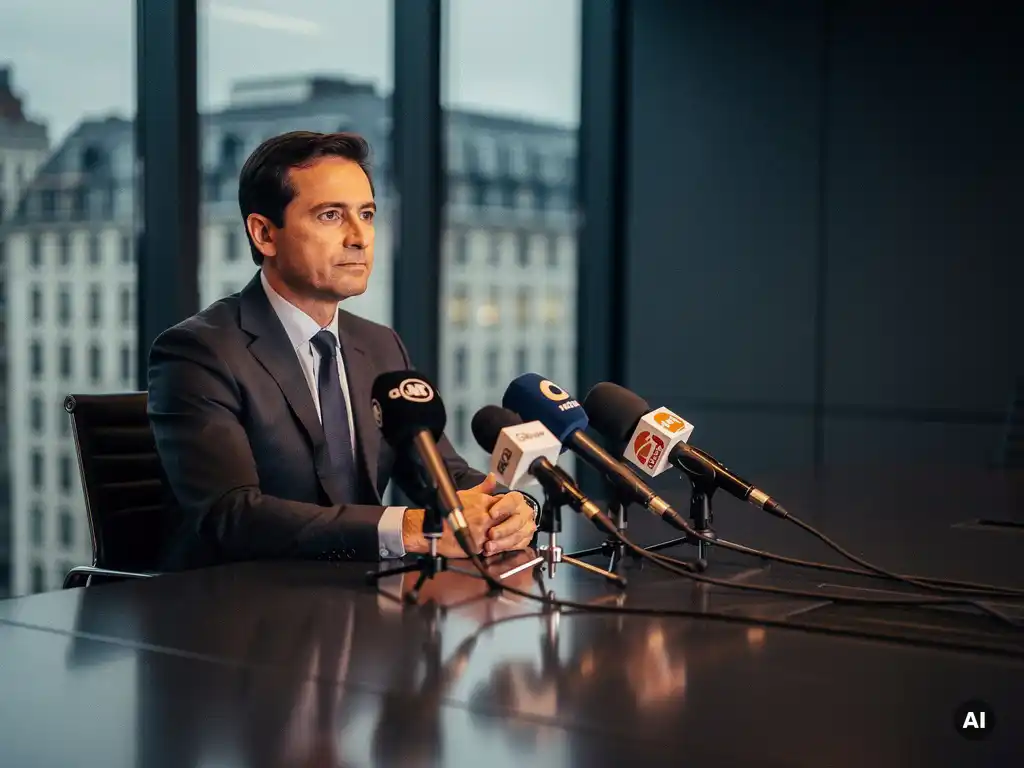
Media training is one of the most concrete investments in crisis preparedness for executives. Anyone who stands in front of the camera as a CEO, board member, or communications officer during an organizational crisis needs more than subject matter expertise: the way a message is delivered also determines how credible and trustworthy an organization comes across. Media training helps executives communicate clearly, composedly, and purposefully in those situations. The questions below provide a concrete picture of what media training involves, who needs it, and when it has the greatest impact.
What makes an executive an effective spokesperson during a crisis?
An effective spokesperson during a crisis combines three qualities: credibility, clarity, and composure. Credibility means that the person in question radiates the organization’s confidence and comes across as authentic. Clarity means that key messages are understandable to a broad audience. Composure means that the spokesperson remains consistent and controlled even under pressure.
In practice, we see that executives who are well-informed on the substance still struggle with media interactions during a crisis. The pressure is high, the questions are sometimes aggressive, and the urge to explain or defend everything is strong. This leads to lengthy answers, awkward phrasing, or statements that are later taken out of context.
What makes a spokesperson effective is therefore not only what they say, but how they say it. This includes body language, use of voice, handling difficult questions, and sticking to pre-determined key messages. These skills can be trained, but require targeted preparation and practice.
What concrete skills does media training develop in executives?
Media training for executives focuses on a set of concrete, applicable skills that are immediately usable in a media interview or press conference. It is not about memorizing fixed answers, but about developing techniques that also hold up under pressure.
Typical skills covered during a crisis communication training:
- Message control: learning to formulate key messages clearly and consistently return to them, even when questions try to steer the spokesperson in a different direction.
- Handling questions: dealing with hypothetical, suggestive, or aggressive questions without responding defensively or evasively.
- Non-verbal communication: becoming aware of posture, eye contact, tone of voice, and facial expression — elements that also determine how a message is received.
- Bridging: the technique of returning from a difficult question to your own message in a natural and credible way.
- Handling silence: knowing when to say nothing, and being able to sustain that comfortably without filling in or over-elaborating.
- Understanding media logic: insight into how journalists work, what they are looking for, and how an interview or press conference is structured.
In good media training, these skills are not addressed theoretically, but practiced through realistic scenarios, video analysis, and targeted feedback. That is what makes the difference between knowing about communication and actually being able to communicate under pressure.
When is the right time to start media training?
The right time for media training is well before a crisis arises. Those who wait until an incident has occurred no longer have time for thorough preparation. Media training belongs in the crisis preparedness phase of an organization, alongside the development of crisis communication plans, stakeholder mapping, and scenario analyses.
In practice, there are three moments when media training is particularly relevant:
- As part of structural crisis preparedness: when an organization wants to strengthen its crisis readiness and prepare potential spokespersons for a range of scenarios.
- In anticipation of a sensitive situation: think of an announced restructuring, a legal dispute that could become public, or a merger that raises questions among employees and the media.
- After an incident or crisis: as an evaluation and preparation for the next time, so that lessons learned are translated into concrete skills.
Reputation management for executives does not begin the moment a journalist calls. Those who only start thinking about messages and approach at that point are communicating reactively. That is rarely the strongest position.
How does media training differ from preparing for a press conference or interview?
Media training and the preparation for a specific interview or press conference are two different things. Media training is structural competency development: it builds skills that are broadly applicable. Preparing for a specific media interaction is situation-specific and focuses on the content, context, and expected questions of that moment.
Good preparation for an interview includes determining key messages, anticipating difficult questions, aligning the communication strategy with Legal or HR where necessary, and practicing the specific phrasing. That is tailored work for one situation.
Media training gives the executive the underlying tools to make effective use of that situation-specific preparation. Without those foundational skills, even the best interview preparation can fail the moment a journalist asks unexpected questions or the tone becomes sharper than anticipated. Both are therefore complementary: media training lays the foundation, and situation-specific preparation builds concretely upon it.
What are the most common mistakes executives make when facing the media?
Executives who are insufficiently prepared for media interactions repeatedly make a number of mistakes during times of crisis. These mistakes are understandable, but they can significantly damage an organization’s reputation.
- Providing too much information: the urge to explain everything leads to long, complex answers that journalists quote selectively or that obscure the message.
- Speculating or answering hypothetically: engaging with “what if” questions takes a spokesperson into territory where they have no control.
- Responding defensively: rebutting criticism rather than acknowledging what can be acknowledged breeds distrust and escalates the tone of the conversation.
- Contradictory messages: when multiple people communicate on behalf of the organization without coordination, inconsistencies arise that the media amplify.
- Legal language: phrasing driven by legal caution sounds evasive and cold, which undermines trust.
- Failing to show empathy: in crises where people have been affected, stakeholders expect humanity. A purely businesslike tone misses that dimension.
What all these mistakes have in common is that they are avoidable with the right preparation. Spokesperson training helps executives recognize these pitfalls and deal with them consciously.
Who within an organization needs media training?
Media training is not exclusively reserved for the CEO or the communications director. In a crisis, multiple people may come into contact with the media, and each of them represents the organization. It is therefore wise to prepare a broader group.
Who qualifies for media training in an organizational context:
- CEO and members of the executive team: they are the face of the organization and are the first to be approached by the media in serious crises.
- Communications director and spokespersons: they handle media contact on a daily basis and benefit from refining their skills in crisis situations.
- HR director and operations managers: during restructurings, labor disputes, or operational incidents, they too are regularly on the front line.
- Legal and compliance officers: they need to learn to communicate in media-friendly language that is understandable without creating legal risk.
- Local managers or site managers: in industrial incidents or NIMBY issues, they are often the first point of contact for local media and residents.
The intensity of training differs by role. A CEO has different needs than a local plant manager. But the principle is the same: anyone who communicates on behalf of the organization must be prepared to do so.
How Whyte helps with media training and crisis preparedness
Whyte Corporate Affairs supports executives and organizations in fully preparing for media interactions during times of crisis. This includes both structural media training and situation-specific guidance when a sensitive matter arises.
Concretely, Whyte offers:
- Individual and group media training for CEOs, executive team members, spokespersons, and other potential media contacts within the organization.
- Realistic practice sessions with experienced trainers who know the Belgian media landscape, both in Dutch and in French.
- Preparation for specific media appearances, including formulating key messages, anticipating difficult questions, and alignment with Legal, HR, or other relevant disciplines.
- Integration of media training within broader crisis preparedness: crisis plans, scenario analyses, crisis cell structures, and simulations.
- Support during an acute crisis, including assistance with spokespersons, stakeholder communication, and media relations.
Whyte’s approach always starts from the specific context of the organization: the sector, the stakeholder environment, the Belgian institutional reality, and the disciplines involved. Media training never stands alone, but forms part of an integrated communication strategy. Want to know how Whyte can concretely prepare your organization? Get in touch for a no-obligation conversation.
Frequently Asked Questions
How long does a typical media training for executives last?
The duration of media training depends on the objective and the target audience. A basic training for an individual executive typically lasts half a day to a full day, while a group training or a program covering multiple scenarios can be spread over two days. It is important that there is sufficient time for repeated practice and video analysis, as a single introduction to the techniques is rarely enough to internalize them under pressure.
What if an executive cannot say anything at all during a crisis due to legal restrictions?
Even ‘no comment’ is a communication choice — and a risky one. A well-prepared spokesperson learns how to be transparent about what can be said, without creating legal risk. Phrasings such as ‘We are unable to comment on ongoing proceedings at this time, but what we can share with you is…’ keep the dialogue open and demonstrate goodwill, without exposing the organization. Media training helps executives find that balance in collaboration with Legal.
How often should media training be repeated to remain effective?
Media training is not a one-time activity, but a skill that needs to be maintained. A refresher session every one to two years is a good guideline, supplemented by targeted preparation whenever a sensitive matter or a public appearance is on the horizon. New executives taking on a spokesperson role should ideally receive basic training as soon as possible after joining, so that they are not confronted with media pressure for the first time at a moment when it truly matters.
Does media training also work for executives who are naturally introverted or dislike being on camera?
Yes, and often particularly well. More introverted executives tend to be better at thinking before they speak, which is an asset in media interactions. Media training helps them leverage that strength while also reducing nerves or discomfort in front of the camera through repeated exposure and targeted feedback. Authenticity is one of the most powerful tools a spokesperson has, and it is not reserved for extroverted personalities.
Can media training also be useful outside of crisis communication, for example for routine media appearances?
Absolutely. The skills developed in media training are equally valuable for product launches, annual results, sector debates, or policy positions as they are for crisis communication. An executive trained to communicate clearly under pressure will also come across more strongly in less tense media situations. Moreover, consistent and confident communication during calm periods builds the reputational capital that an organization needs when things do go wrong.
How does an organization prepare multiple spokespersons without risking contradictory messages?
The key lies in centralized message development combined with decentralized delivery. All potential spokespersons work from the same set of key messages, which have been agreed upon in advance between communications, management, Legal, and HR. Media training then teaches them how to deliver those messages in an authentic, role-specific way. Regular joint practice sessions and clear internal alignment on who communicates what prevent the media from being able to exploit inconsistencies.
What is the difference between media training in Dutch and in French in the Belgian context?
In Belgium, the language border is also a media border: Flemish and French-speaking media each have their own journalistic culture, tone, and expectations. A spokesperson who is active in both regions must not only be linguistically proficient, but also understand the nuances of how a message lands best in each context. Good media training in the Belgian context takes that duality into account and trains executives in both languages and media cultures where needed.
Related Articles
- How Does an Organization Handle a Boycott or Public Backlash?
- What Should a Spokesperson Do During a Company Crisis?
- How Do You Involve Governments and Regulators in Your Crisis Response?
- What Is a Crisis Simulation and What Does It Offer an Organization?
- How Do You Measure Whether Your Reputation Recovery After a Crisis Is Effective?
This content was generated with the help of AI and it may contain mistakes